Wednesday, 20 March 2024

On Being an Autistic Troublemaker

 There's a reason why I relate to Tuco from 'The Good, the Bad and the Ugly'. He's not perfect. He's violent, self-centered, rude, mouthy, garrulous, quick-tempered and generally lacks social skills. He has many positive qualities, but he's not labeled "The Ugly" for nothing. All of his qualities, positive and negative, have resonated with me from the moment I first watched the film. I was Tuco. I regretted not realizing this years ago, and if I had, even if my emotional experience had been different, I would have felt a sense of relief while watching his story. This revelation that I was a lot like him is why I was so shocked, as well as pleasantly surprised, that my film 'Force of Habit' was a finalist at Autism Uncut. Usually, the autistic people who get rewarded for their efforts, especially the autistic women, are pleasant, docile and charmingly quirky. I admit to being jealous of the selected Autism Ambassadors from various charities. I'm not a model or an actress, but a typical overly emotional artist.

I have spent my life being viewed as a troublemaker and I have come to believe it. I could have stopped to think that I was being misunderstood, but that didn't fit in with the emotionally secure society of the 2000s. I was always getting in trouble in school and with my family.

I tend to hurt others' feelings, even if there are times where I don't mean it. Often I would say something because I think it's funny, and people would misunderstand, which is strange, because usually people understand everything.

I get stressed easily, because I have physical impairments such as low pain tolerance, sensory sensitivity, dyspraxia and a lack of a sense of time, and I lash out at whatever is around me. You understand why that last part makes me a Tuco Ramirez fangirl. 

My need to have control in my life has caused me to be viewed as a brat. Maybe I am, even though I never intended to be one.

I embody everything that is ugly about autism, and that is not necessarily a bad thing when it comes to activism and advocacy. Even parents with misbehaving autistic children can lay claim to their children's innocence. I can be understood without being innocent, because I'm an adult and should know better. 

I don't have the social skills to be an ambassador, but I am no less autistic than Christine Martin McGuinness.


Friday, 31 March 2023

Top 10 Joachim Kaps roles

Whenever I love a performance, I look into the actor's other work. And what an array of roles I've found from Joachim Kaps! From his voice acting roles, you wouldn't know that he was the German Patrick Swayze.

10. Algonquin C. Lumpus (German dub of Camp Lazlo)- The German dub of 'Camp Lazlo' is fairly decent, but it's got a good interpretation of Lumpus from Kaps.

9. Gus (German dub of Cinderella 3) Kaps is charming in the role, and although his voice is pitched up, you can tell it's him.

8. J. Thaddeus Toad (German dub of Disney's The Wind in the Willows) Kaps brings his melodic voice and lots of energy to the role. He hits every emotional moment perfectly, and is heartbreaking in the prison scene.

7. Tigger (German dub of Disney's Winnie the Pooh animations) What can I say? Kaps made Tigger his own, while copying Jim Cummings' lisp. He's a delight to listen to. He shows off his singing skills in the dub of 'The Tigger Movie' and excels in the film's comedic and dramatic moments.

6. Dummling (Sherlock Holmes und die Sieben Zwergen) Kaps hams it up like mad in this series, sometimes to annoying levels. However, at times he is adorable, especially in that shiny blond wig. He's sort of a Papageno figure in this fairytale journey. What makes him stand out is that he has a superstitious and devout aspect.

5. Squidward Tentacles (German dub of SpongeBob, Season 9 onwards). After the incredible performance Eberhard Prüter gave, this was a tough act to follow, but Kaps gave an interpretation I grew to love just as much. While Prüter always had an air of dignity, Kaps was wacky and fun. Sometimes, like Prüter, Kaps would interpret an emotion the way it's supposed to be felt, instead of what was on screen. For instance, in 'Snooze, You Lose', he has Squidward's inner monologue sound tired instead of being suddenly angry and alert. His delivery was powerful by being subtle and natural. It's different, but far from wrong. Furthermore, without Squidward, I would neither have learned about Jacob, nor about the three live action roles I will discuss after.

4. Jacob Scribble (German dub of Wunschpunsch) Kaps gave a beautiful performance to Jacob, and a different interpretation to Harry Hill's. While Hill hammed it up, Kaps' performance was a little warmer and more personable, while still dignified. He's also a little more emotional.

3. Hein Kruse (Familie Intakt). Hein is based on Peter Kruse from the 1973 teleplay 'Reizende Ferien', and although he's just as sexy, he's not as well dressed, which means he fits into the comfortable, homey environment of the series. He's a nice, easygoing guy, but somehow more exciting than the rest of the cast, who act like broad caricatures.


2. Hans-Günther Koch (Ferienheim Bergkristall). Hans-Günther also fits into his comfortable, homey environment, but he's a bolder dresser. I might even say he's a fashion icon. What makes Hans-Günther stand out is that he's an unsympathetic womaniser, and although he loves Susanne, he still cheats on her a lot. And yet he's not completely unlikeable, thanks to Kaps' charismatic performance. 'Ferienheim Bergkristall' is a very funny series, despite the fact that everyone in it hams it up to the max. Hans-Günther is only a little bit of a ham, which is refreshing, when placed alongside the likes of Alois and Mr. Oberpichler, for instance.

Although not too different from Rolf, or Ingolf Eigenwillig, Hans-Günther is still unique somehow.


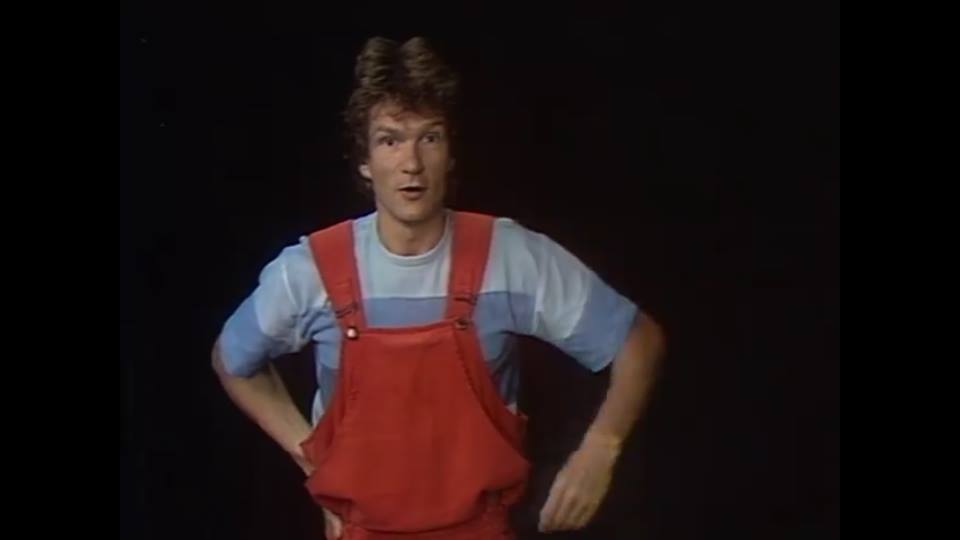
1. Achim (Brummkreisel). Unless you really did some research, you wouldn't realize that Kaps was a kids' TV host for a while. It's hard to describe 'Brummkreisel', but it's really just a series of random but harmless events, bookended by a spinning top (hence the name).
Achim is the perfect kids' TV host. He's colourful but not overbearing, and gentle but not boring. He's kind and patient, but far from a pushover, especially concerning his bossy buddy Kunibert. He's mischievous, but not mean. And he's a leader but knows how to compromise.


Paidionocracy

 Paidionocracy is a word I just made up, compiled of the words paidion and kratos.

It incrementally started in the late 2000s or early 2010s, when there was a collective backlash against everything from the election of President Obama to the Green Hornet movie, starting from the fringe and making its way into leadership itself. It seems to be a societal pattern. It has empowered people to hate everything that isn't white, male and cisgender on "social" media posts they have no business commenting on; on Facebook, comments only beat the algorithm. Now it has manifested in book bans, abortion bans and drag show bans across the US, Republicans in America heckling President Biden while dressed like Batman antagonists, outrage over people having to learn the truth about the British Empire, repression of both migrants and environmental protestors in Britain, and far-right Austrian lawmakers walking out of Ukrainian President Zelenskyy's speech to the country's parliament.

Here I was thinking we were in the 21st Century, not the 15th. How am I living in a world where people feel entitled to screech about everything that isn't malicious to them, just unfamiliar?

Sometimes it seems the meek have inherited the Earth, other times it has been inherited by people throwing their proverbial toys out of the stroller.


Saturday, 25 April 2020

To what extent do "Oyako Neburi"'s Ryouko Tendou and Ren Kagami fit the archetypes of Tadashi Ozawa's 'Bishoujo Game Characters' and Go Office's 'Mastering Bishoujo Characters'?


In this post I am going to analyse the two young girl characters in 'Oyako Neburi~ Sasou Hitozuma Dakaretai Oyako' based on the archetypes presented in 'How to Draw Anime and Game Characters Vol. 5: Bishoujo Game Characters by Tadashi Ozawa' and 'More How to Draw Manga: Mastering Bishoujo Characters'. While 'Mastering Bishoujo Characters' isn't about games, it presents the same archetypes as 'Bishoujo Game Characters'.


Ryouko has elements of ‘The Heroine’ and ‘The Princess’ in ‘Bishoujo Game characters'. She has long straight hair and the gentle countenance of the Heroine. However, she also has the reserved, vulnerable body language of the 'Princess', particularly the shy variety Ozawa shows in Chapter 2.1. In ‘Mastering Bishoujo Characters’, she’s a mix between the Reserved Girl and the Vulnerable Girl. 


Ren is trickier to decipher. She fits no concrete character types in ‘Bishoujo Game Characters’. She’s more confident than the Heroine, more reserved than the Smart Aleck and more “mature” than the Cute, Younger Girl”. Yet in ‘Mastering Bishoujo Characters’, she fits the role of ‘The Cutie’; large eyes, curly curtained hair and a round face. However, although her eyes are upward slanted, there’s still a confident look in her expression. Still, ‘The Bubblehead’ seems to describe her. Despite her sexuality, she acts like a child and talks with a babyish voice. Tadashi Ozawa writes that “An ‘open pose’ (with the feet apart and hands raised above the shoulders) is used to suggest an outgoing, extroverted personality, and a ‘closed pose’ (with the hands held lower than the shoulders, the arms either crossed or hands clasped or hidden, and the knees together) is used to suggest a reserved, introverted personality.” Ren’s hands are never raised above her shoulders, but she always projects an air of confidence and her “crying” sprite evokes Ozawa’s “Cute, Younger Girl” archetype, particularly the RPG design seen in Chapter 2.2. This odd combination of character traits makes her stand out from all of the other childhood friend characters in visual novels and bishoujo games.

In conclusion, Ryouko fits many elements of archetypal heroines as shown in both the books, almost an ideal example of Japanese beauty, while Ren is more eclectic and unique.

Sunday, 19 January 2020

My other vintage protest

There have been a lot of references to Orwell's 1984 recently. Politicians and Donald Trump have basically been using it as an instruction manual, using doublespeak to gaslight the public when they're not outright lying to them and using nationalism to rally public support and make them turn a blind eye to the crimes they've committed.

And now England is taking it a step further (or a step as far as a few other countries have already gone) by having the Big Ben bong crowdfund, the Brexit 50p coin and this "Festival of Brexit", which all sound really Orwellian. It sounds like they're preparing for Hate Week or something.

The Leave campaign was illegal, but those who voted to leave don't care because they're in the middle of an identity crisis. What does it mean to be British, and more to the point what does it mean to be English?

Now, when people talk about England going backwards, they don't mean it literally. So as with America, I'm taking it literally.
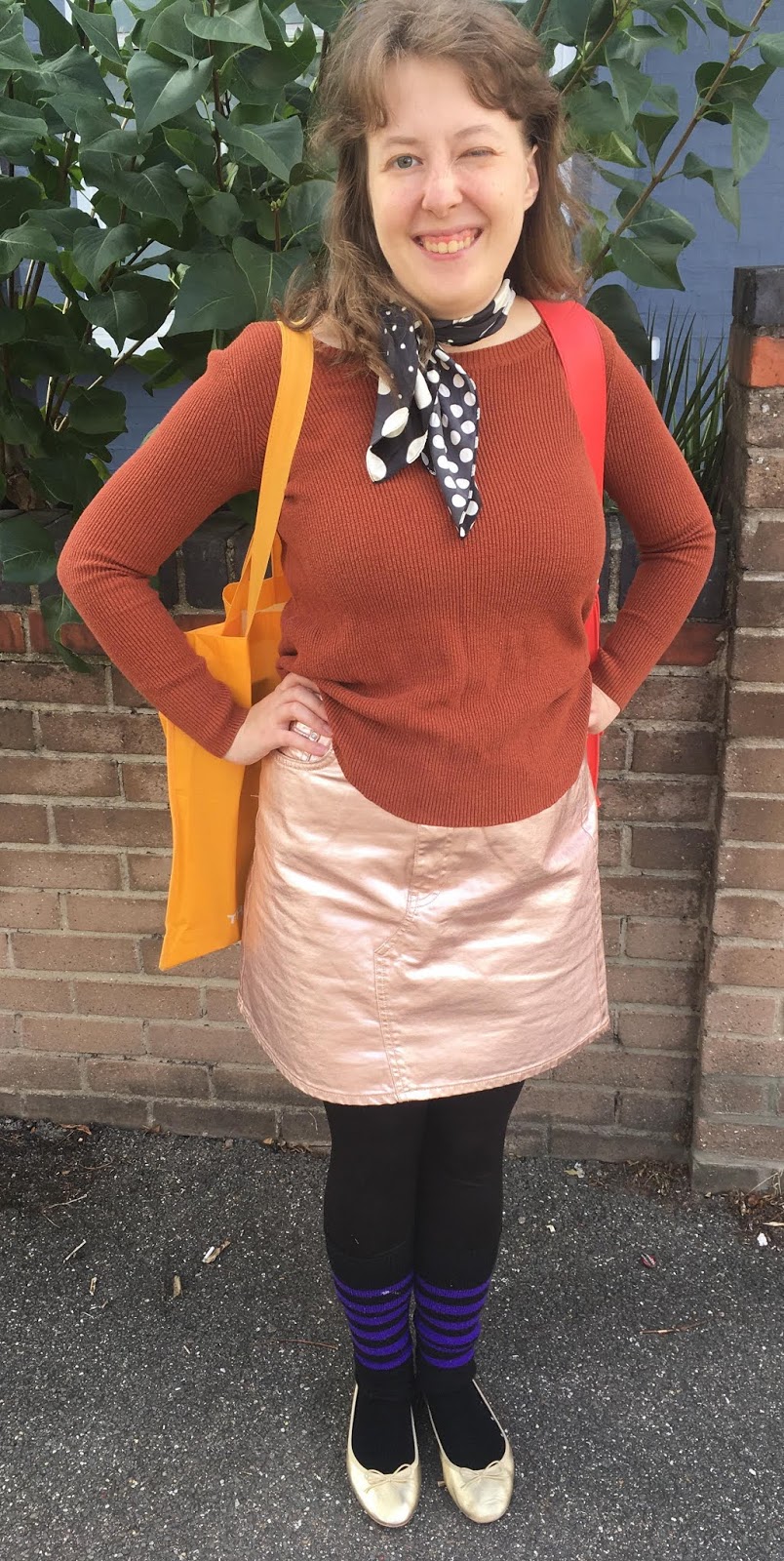
I'm mainly inspired by Ferienheim Bergkristall, particularly Joachim Kaps' character Hans-Günther Koch, although I'm inspired by Brittany Miller from the 80's Alvin and the Chipmunks cartoon as well.
Ferienheim Bergkristall is of particular fascination to me because it's East German. And East Germany may not have been part of the European Union but it was still European. I also like it because it's funny and it's got Joachim Kaps in it, and he makes anything better.

There's been a big revival in 1980's fashion which gives me the impression that Bershka, Marks and Spencer and River Island know where the country is heading.


Thursday, 17 January 2019

Top Five Favourite Song Kang-ho Roles

For Song Kang-ho's 52nd birthday I am posting a list of my top five favourite roles from him. The choices were tough because Song is great in everything he does. He has such presence in his roles and he's adept at playing both comedic and dramatic roles. But sometimes, his best roles have a bit of both.

5. Kang In-goo from The Show Must Go On

In-goo is a gangster, but not a very rich one. His wife is unhappy with him earning money this way, his daughter hates him and he's constantly tired. He doesn't have much of an opinion about his job, but he cares a lot about doing it. He wants a better life for his wife and daughter, even if he has to lie and cheat his way into getting it for them. In the end he does, but he's not in it, and he's alone and miserable. And diabetic.
Song plays In-goo like a working stiff who just happens to be a mercenary. He's not a good person but he's still just an ordinary guy trying to get by.

4. King Yeong-jo from The Throne

The Throne is an intimate portrait of the crown prince Sa-do and his abusive father who locked him in a rice chest for eight days. Although Yeong-jo was a despot who is implied to have committed regicide to become king, even though he said he didn't want to become king, he was also eccentric and superstitious. His relationship with his son is ambiguous. Was he concerned about him, or only loved what he could become? In any case, he was devastated about Sa-do's death, although he didn't put any blame on himself for giving the crown prince mental health problems.
Song has a powerful screen presence, which is used to great effect. Some humour is conveyed, but only in his superstitious side. Still, a Song Kang-ho performance is still not one to miss.

3. Alex from Madagascar

Song voices Alex in the Korean dub of Madagascar. Voice acting is something Song doesn't normally do but has a great voice range and an incredible amount of charm. Although he's a celebrity, he's not an international one like Ben Stiller is so it's easier to ignore. Song brings his own brand of energy to Alex and absolutely nails the character's more emotionally damaged moments. Pitch perfect.

2. Yoon Tae-goo from The Good, the Bad, the Weird

Tae-goo acts like a goofball, but he's dangerous. It seems simple, but Song makes the role compelling. It helps that Tae-goo has an even uglier past than that of his counterpart Tuco Ramirez. Song is a ton of fun. As always, he throws himself into the role and plays this character who is a complete mystery but so enjoyable to watch. He gives Tae-goo a lot of weight and has great comic timing. Eli Wallach would have been proud.

1.  Park Gang-du from The Host


It's only brushed on, but Gang-du has a neurological disability. It only needs to be brushed on, because there's more to Gang-du than that. He's an inept dad, but he loves his daughter. The very reason he lost her was because he panicked in trying to protect her. He doesn't seem bright, but he's surprisingly resourceful, and is incredibly determined, never giving up in trying to save Hyun-seo. He's not particularly ambitious, he just wants to get back to his old boring life, and performs heroic feats in doing so. The result costs poor Gang-du dearly.
He seems to be lazy, but he's either narcoleptic, or has strong emotional burnouts. He has had them since he was little, in any case. He seems to be an idiot but a deleted scene reveals that he was a very early reader, teaching himself the Korean alphabet without his father's assistance.
Usually I have reservations about non-disabled people playing disabled people but Song gives a wonderfully layered performance. Kind of like Park Dong-jin from Sympathy for Mr. Vengeance, but more innocent, more childlike and more open.
The best thing about Gang-du is that he stands up for himself constantly. When a translator interrupts him, he sobs, "Please don't cut me off! My words are words, too! Why don't you listen to my words?" Physically and mentally, he's the strongest of Song's roles.

Thursday, 13 December 2018

The What A Character Blogathon: Minoru Chiaki


Born Katsuji Sasaki in Hokkaido, Japan on the 28th of April 1917, Minoru Chiaki was one of the most astonishingly versatile character actors to ever grace the silver screen.

Akira Kurosawa discovered him in the play The Abortion Doctor (which he would adapt into The Quiet Duel) and cast him in the film Stray Dog as a nightclub worker sweltering under the heat as he is questioned by Sato and Murakami.
Since then he went to appear in nine other Kurosawa films and became popular with both Toho and Toei.

Chiaki showed remarkable capability at both comedic and dramatic roles, from the noblest of men to the most unsavory of crooks. Tall and baby-faced, with large front teeth and a laugh like Marge Simpson, he was a memorable screen presence, even though he never truly stepped out from beneath Toshiro Mifune's shadow.

It's hard to put into words how astonishing Chiaki's range was: from playing the kind and gentle priest in Rashomon, the noble Yoshiaki Miki in Throne of Blood, and the jolly boatman Sasuke in Samurai III: Duel at Ganryu Island, to the scoundrel Tahei in The Hidden Fortress and the downright nasty Tono-sama in The Lower Depths, there was no "type" given to Chiaki's roles, except for the likeable screen charisma he bestowed on every one of his roles.
Sometimes his roles were more complex than they appeared, such as the well-intentioned Heihachi Hayashida in Seven Samurai, who teases Kikuchiyo to no end and whose jokes sometimes hurt people's feelings, and the concerned but bad-tempered Jiro Nakajima in I Live in Fear.

In each of his roles there is a different feel to them. This image is a testament to the scope of Chiaki's talent. The different expressions and their eyes and their body language convey a vast range of personalities.


Clockwise from top left: the priest from 'Rashomon', Heihachi Hayashida from 'Seven Samurai', Yoshiyaki Miki from 'Throne of Blood', Jiro Nakajima from 'I Live in Fear', Tahei from 'The Hidden Fortress' and Tono-sama from 'The Lower Depths'.

Chiaki is little-known outside of Japan but he had an illustrious career in both film and television.

The last of the Seven Samurai, he died in 1999 at the ripe old age of 82. One of his last films was Gray Sunset, in which he played a former University professor with Alzheimer's, and for that he won a well-deserved Japan Academy Prize for best actor.